---
license: apache-2.0
pipeline_tag: object-detection
tags:
- PaddleOCR
- PaddlePaddle
- image-segmentation
- ocr
- layout
- layout_detection
language:
- en
- zh
- multilingual
library_name: transformers
base_model:
- PaddlePaddle/PP-DocLayoutV3
---
Unified Layout Module for PaddleOCR-VL 1.5/1.6 & GLM-OCR
[](https://github.com/PaddlePaddle/PaddleOCR)
[](https://huggingface.co/PaddlePaddle/PP-DocLayoutV3)
[](https://modelscope.cn/models/PaddlePaddle/PP-DocLayoutV3)
[](https://huggingface.co/spaces/PaddlePaddle/PaddleOCR-VL-1.5_Online_Demo)
[](https://modelscope.cn/studios/PaddlePaddle/PaddleOCR-VL-1.5_Online_Demo/summary)
[](https://discord.gg/JPmZXDsEEK)
[](https://x.com/PaddlePaddle)
[](./LICENSE)
**🔥 [Official Website](https://www.paddleocr.com)** |
**📝 [Technical Report](https://arxiv.org/abs/2606.23344)**
## Introduction
This is the model weights for PP-DocLayoutv3 in safetensors format. Get PaddlePaddle weights at [PP-DocLayoutV3](https://huggingface.co/PaddlePaddle/PP-DocLayoutV3)
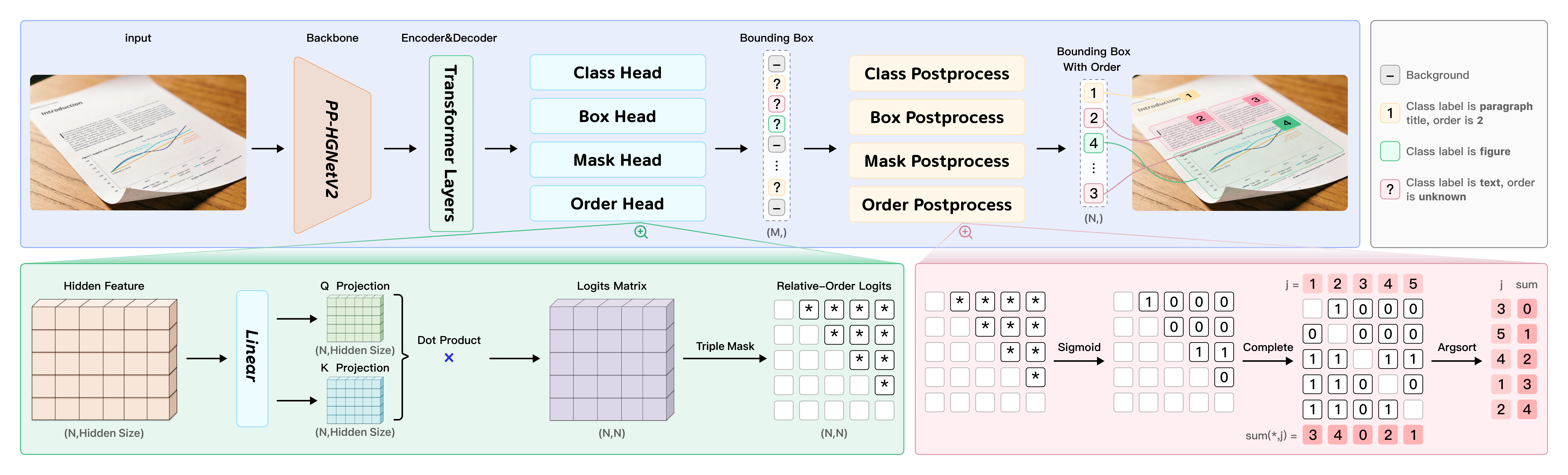
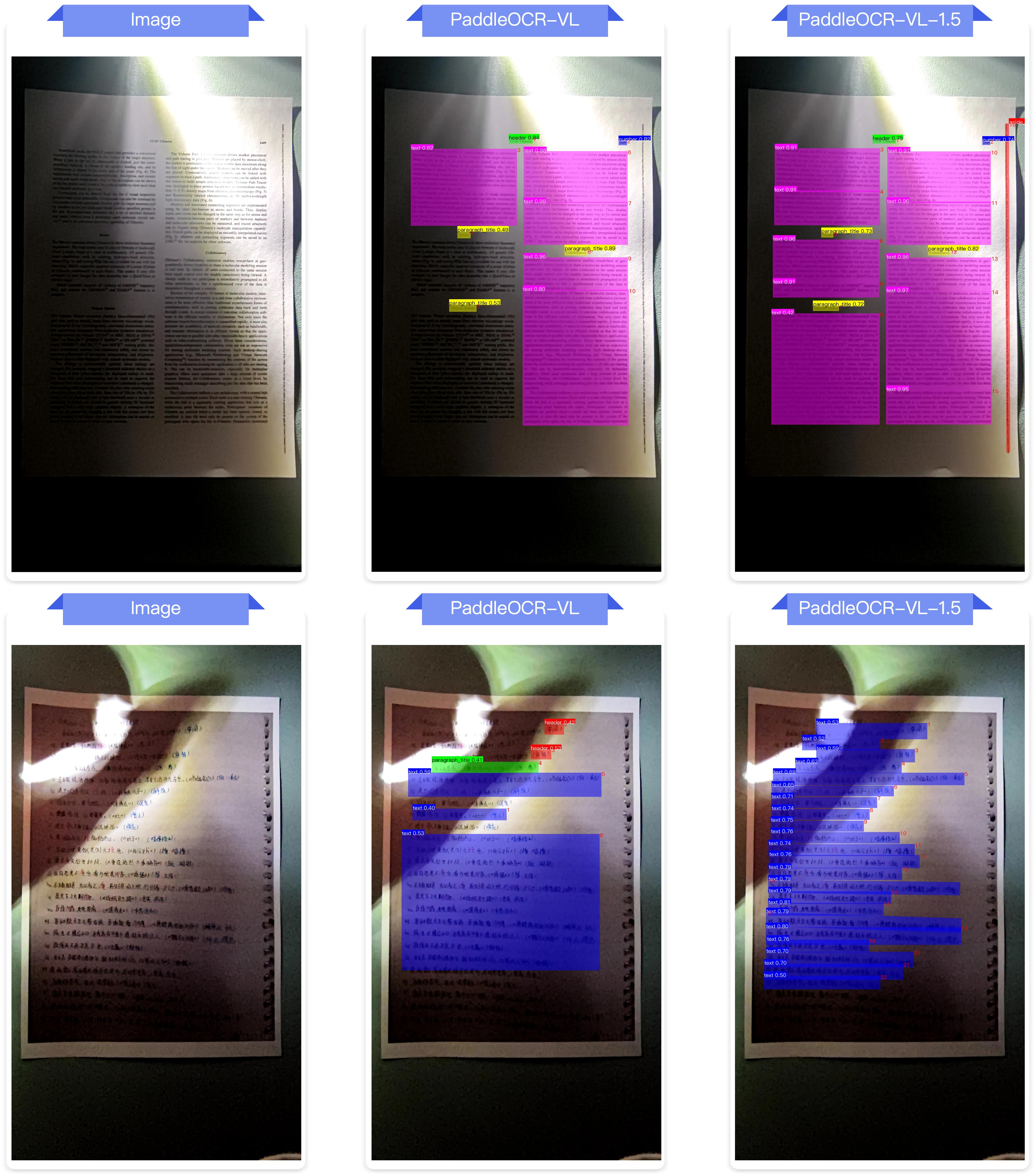
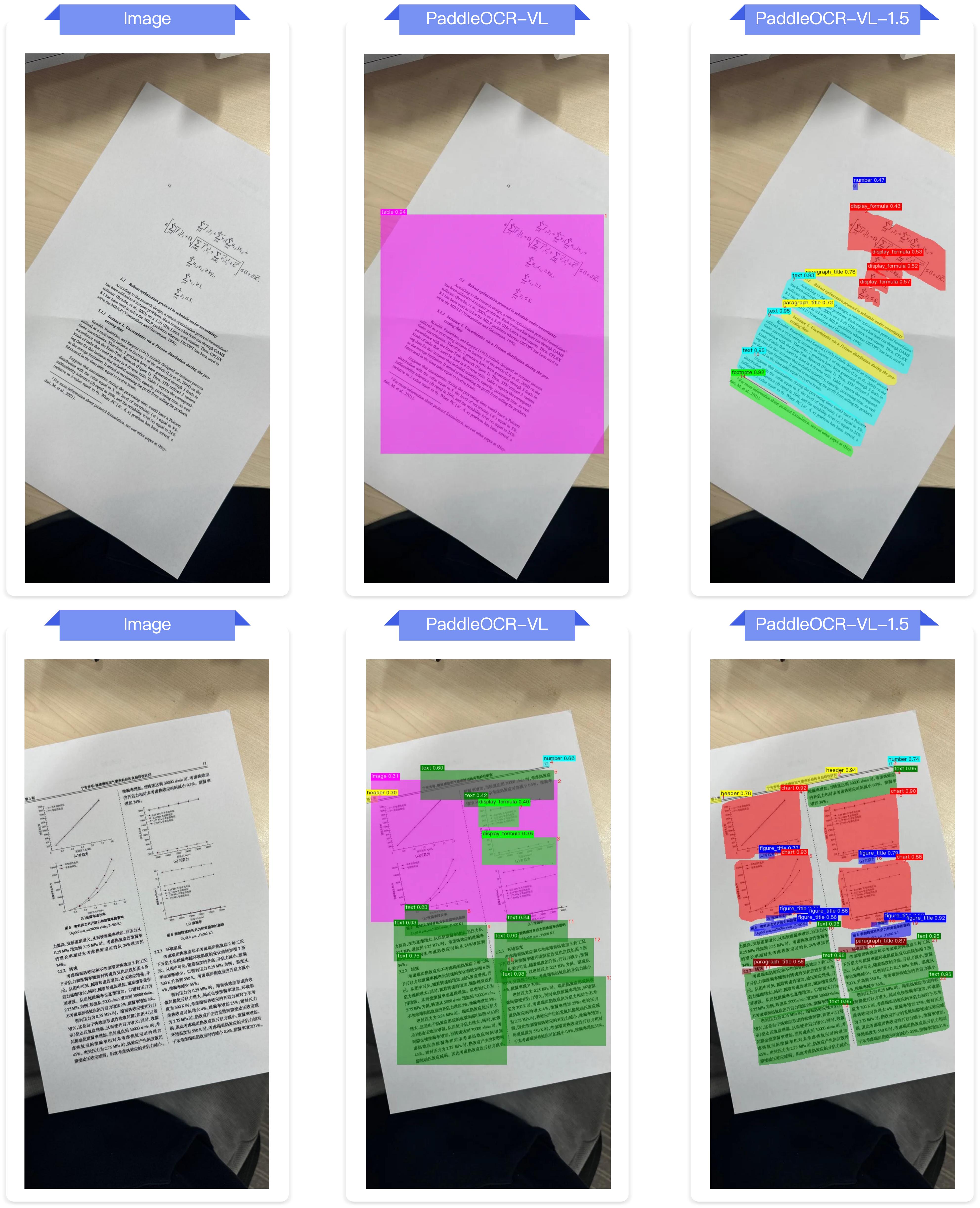
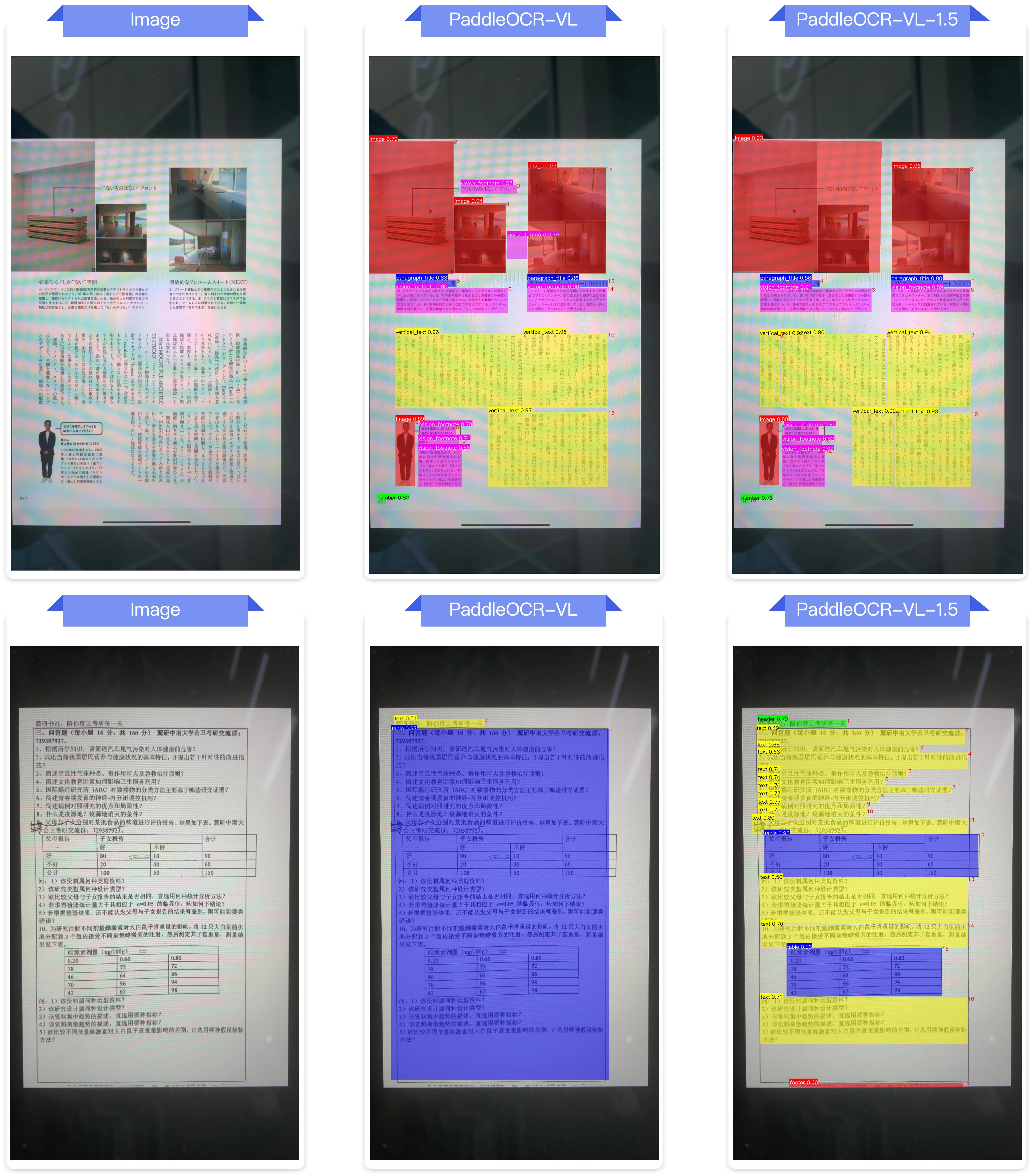
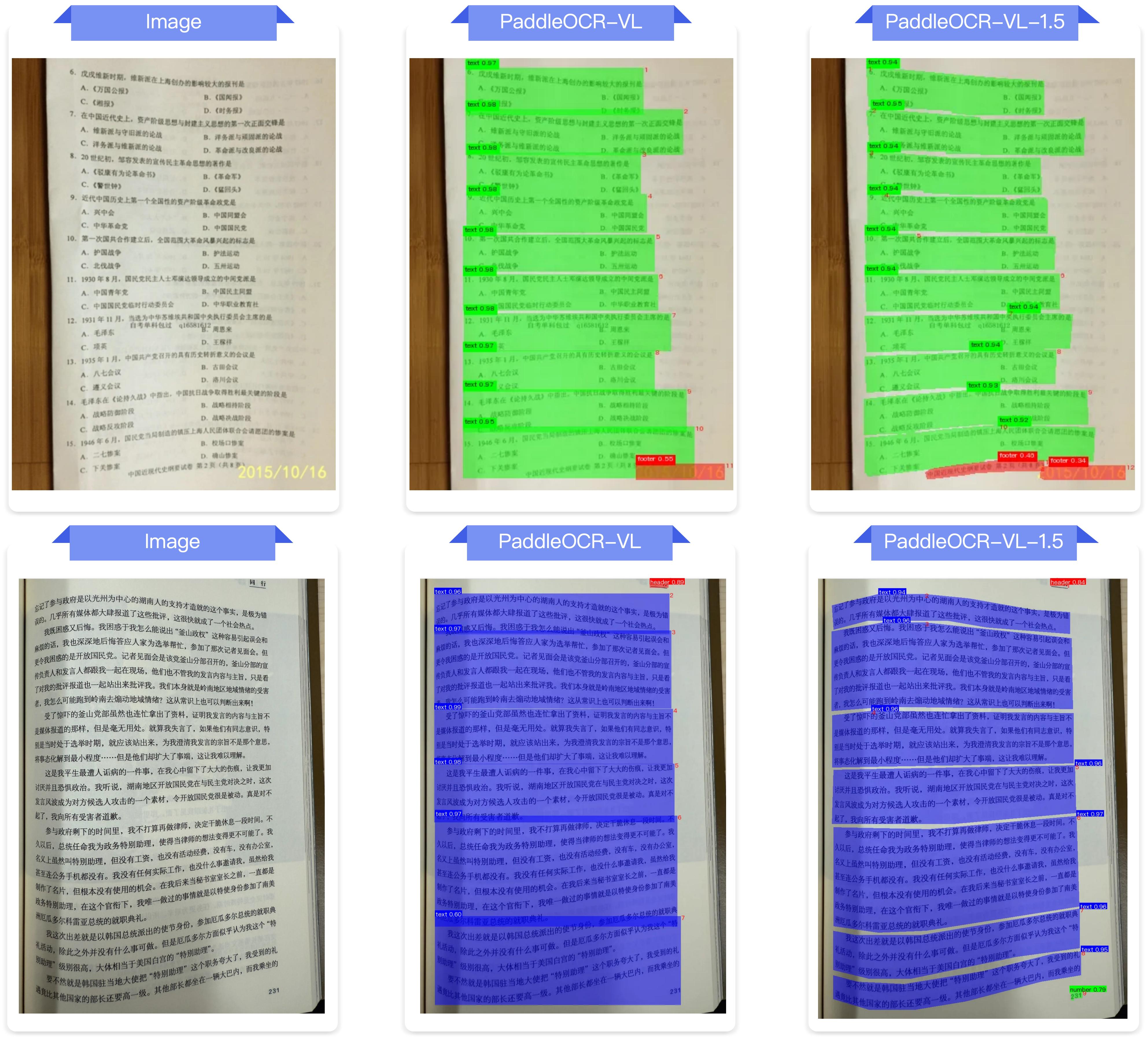
**PP-DocLayoutV3 is specifically engineered to handle non-planar document images. It can directly predict multi-point bounding boxes for layout elements—as opposed to standard two-point boxes—and determine logical reading orders for skewed and curved surfaces within a single forward pass, significantly reducing cascading errors.** This model is an essential component of PaddleOCR-VL-1.5, providing crucial layout analysis for the high-precision parsing of various real-world documents in PaddleOCR-VL.
This work has been accepted to ECCV 2026! 🎉
### **Model Architecture**
## Model Usage
```python
import requests
from PIL import Image
from transformers import AutoImageProcessor, AutoModelForObjectDetection
model_path = "PaddlePaddle/PP-DocLayoutV3_safetensors"
model = AutoModelForObjectDetection.from_pretrained(model_path)
image_processor = AutoImageProcessor.from_pretrained(model_path)
image = Image.open(requests.get("https://paddle-model-ecology.bj.bcebos.com/paddlex/imgs/demo_image/layout_demo.jpg", stream=True).raw)
inputs = image_processor(images=image, return_tensors="pt")
outputs = model(**inputs)
results = image_processor.post_process_object_detection(outputs, target_sizes=[image.size[::-1]])
for result in results:
for idx, (score, label_id, box, polygon_points) in enumerate(zip(result["scores"], result["labels"], result["boxes"], result["polygon_points"])):
score, label = score.item(), label_id.item()
box = [round(i, 2) for i in box.tolist()]
print(f"Order {idx + 1}: {model.config.id2label[label]}, score: {score:.2f}, box: {box}, polygon_points: {polygon_points}")
```
## Visualization
### Light Variation
### Skewing
### Screen-photo
### Curving
## Citation
If you find PP-DocLayoutV3 helpful, feel free to give us a star and citation.
```bibtex
@misc{cui2026rtdoclayoutrealtimeendtoenddocument,
title={RT-DocLayout: Real-Time End-to-End Document Layout Analysis with Reading Order in the Wild},
author={Cheng Cui and Tingquan Gao and Xueqing Wang and Changda Zhou and Hongen Liu and Ting Sun and Yubo Zhang and Zelun Zhang and Jiaxuan Liu and Manhui Lin and Yue Zhang and Suyin Liang and Yiqing Xiang and Yi Liu},
year={2026},
eprint={2606.23344},
archivePrefix={arXiv},
primaryClass={cs.CV},
url={https://arxiv.org/abs/2606.23344},
}
}
```